Everyone deserves a vacation that feels comfortable and enjoyable. If someone in your group has mobility concerns, choosing the right yacht—and understanding how they’ll move around it—can make all the difference.
Perhaps you’re traveling with someone who finds stairs challenging, uses a cane or walker, is recovering from an injury, or simply prefers fewer physical obstacles. Whatever their needs, the right yacht can help everyone feel more comfortable and included.
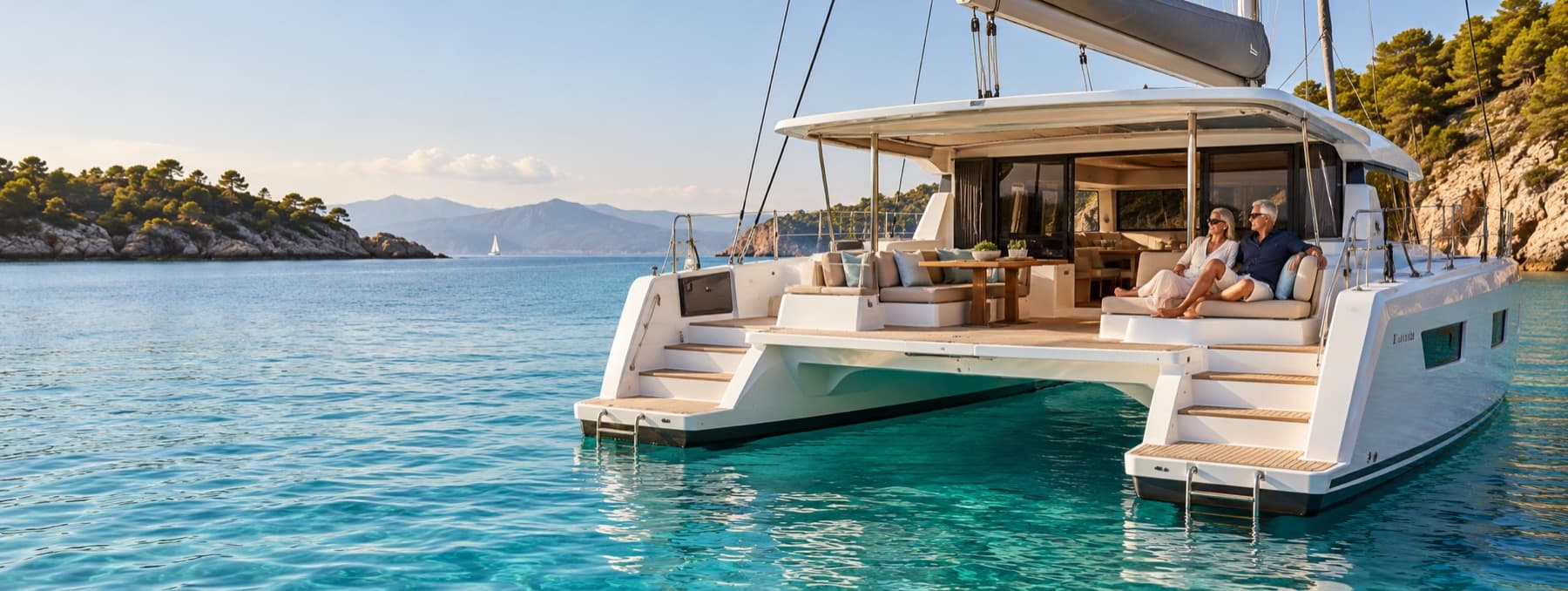
Catamarans offer spacious layouts, wide decks and inviting outdoor living areas. However, they aren’t all designed alike. Some have open layouts and easier transitions between living areas, while others have steep cabin stairs, raised thresholds or boarding arrangements that require greater agility.
As a yacht broker, I look beyond the photographs and brochures to understand how a yacht works for the people who will be enjoying it.
The goal is to find a beautiful yacht that also fits the way your group moves and wants to experience the trip.
Start With the Guest’s Individual Needs
Mobility means something different for everyone. Before recommending a yacht, I like to understand what will make the guest feel comfortable throughout the day.
Can they walk and manage a few steps independently? Do they use a cane, walker or wheelchair? Will they need assistance when boarding or getting in and out of the water?
It’s also helpful to discuss any mobility equipment they’ll bring, including its dimensions and where it can be stored onboard. If medical equipment is needed, we can ask about power requirements and whether the yacht can accommodate it.
These details help us focus on yachts that are a good fit from the beginning.
Getting Aboard: The First Consideration
Before discussing cabins or amenities, I want to understand how guests will board the catamaran.
Catamarans often have low sterns, but boarding arrangements vary by yacht and marina. Depending on the dock height, tides and the yacht’s setup, guests may need to use a passerelle, navigate stern steps or transfer by tender.
Some catamarans feature a hydraulic passerelle, a gangway that extends from the stern toward the dock. Its width, angle and design may make boarding easier, although additional steps or thresholds may still be involved.
I look closely at the number and height of steps, the availability of handrails and whether an additional step could make boarding more comfortable. We also check how stable and suitable the arrangement will be for the individual guest.
These seemingly small details can make a significant difference.
Swimming and Water Access
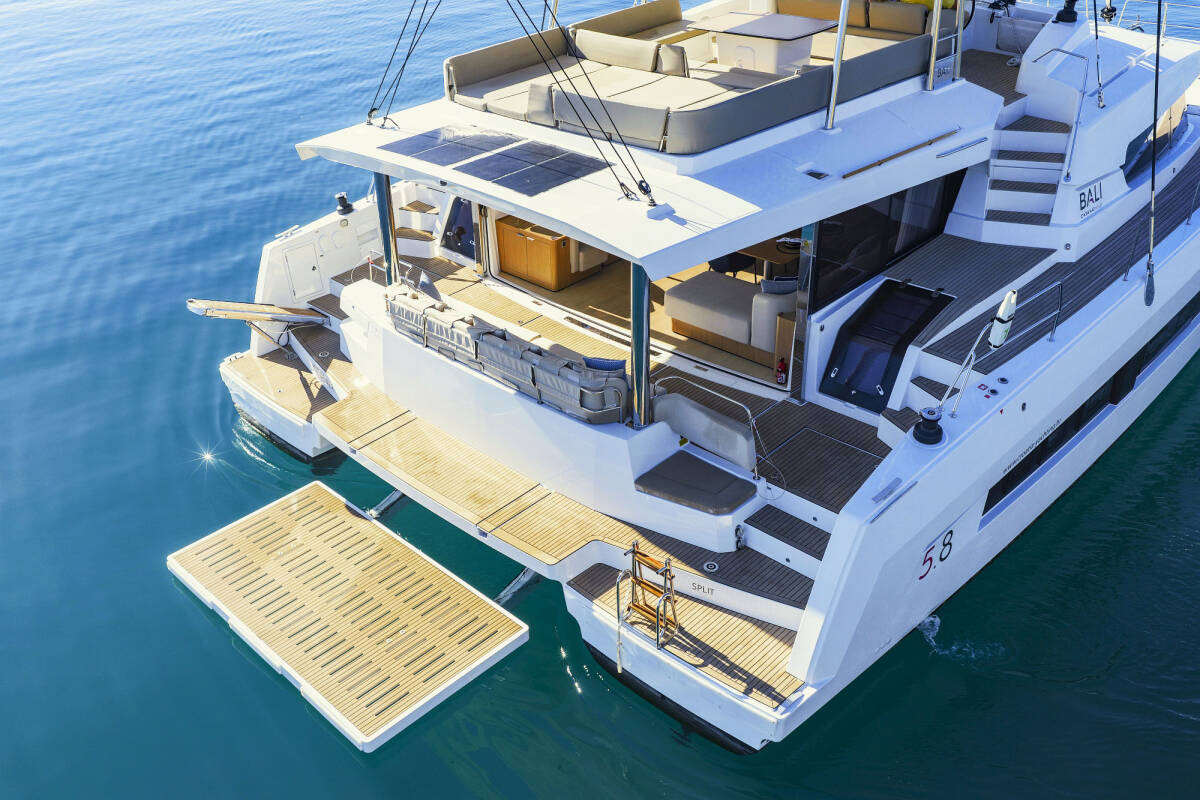
Swimming is one of the pleasures of a catamaran charter, and the stern configuration can make a considerable difference.
Many catamarans have sugar scoops: the stepped platforms at the stern of each hull that lead down toward the water. These provide convenient water access, although guests may still need to navigate several steps and use a swim ladder.
Some catamarans feature a hydraulic swim platform that lowers toward or into the water. This may offer another way to enjoy the water for guests who find a traditional ladder difficult.
However, a swim platform doesn’t automatically make water access suitable for every guest. It’s important to check whether there are handrails, seating or other ways to enter and exit the water, as well as how the yacht and platform may move in a swell.
The captain can assess the conditions and discuss whether the arrangement is suitable for the guest.
Tender Transfers and Exploring Ashore
Exploring seaside villages, secluded beaches and waterfront restaurants often involves taking the catamaran’s tender ashore.
Because the yacht and tender move independently, waves and swell can make transfers challenging for someone with limited mobility. Depending on the yacht, guests may board the tender from the stern steps or a swim platform.
I discuss the boarding arrangement with the captain, including what assistance the crew can provide and whether the guest needs to be able to stand or step independently. It’s best to confirm these details in advance rather than assume the crew can safely lift or transfer a guest.
I also consider itineraries with opportunities for dockside access, which may reduce the need for frequent tender transfers. Marina berths can depend on availability and weather, and additional docking fees may apply.
Some beaches involve a wet landing, where guests step into shallow water and walk onto the beach. This can be difficult for anyone who has trouble with balance, uneven sand or walking through water, so it’s another detail worth discussing in advance.
The Layout Matters More Than the Brand
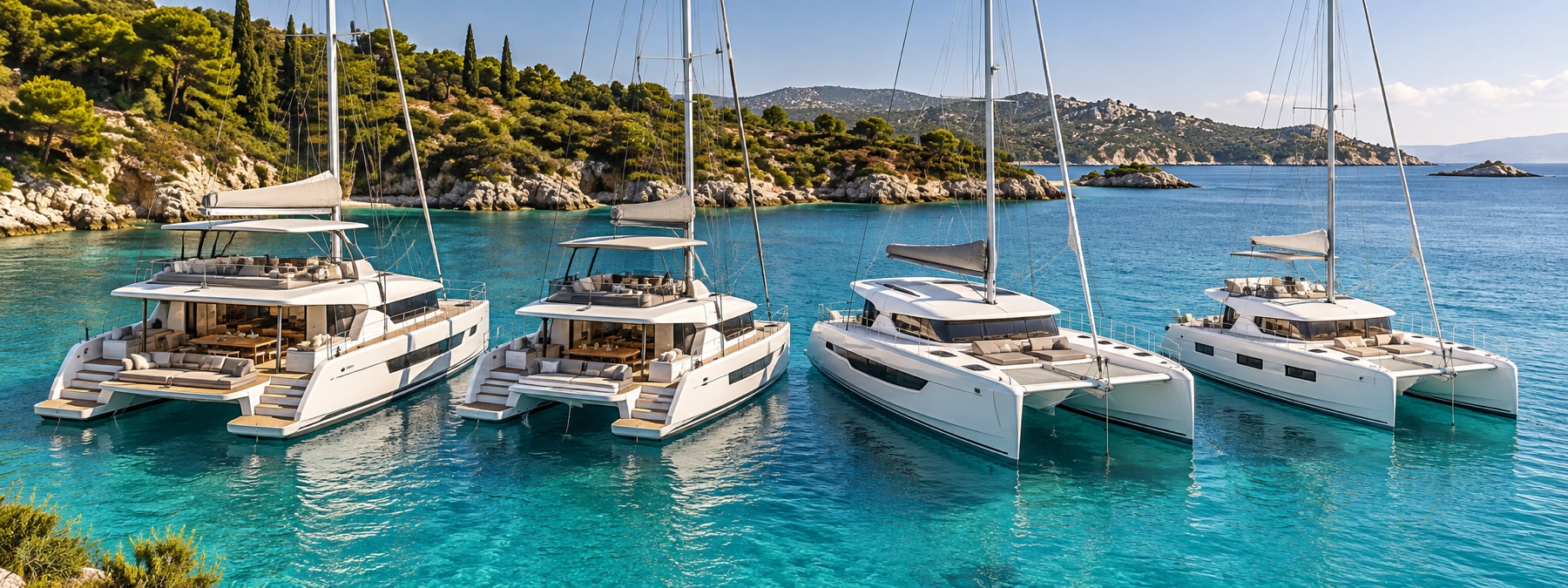
Not all catamarans are designed alike. While several popular builders offer features worth considering, the individual yacht’s model and layout are more important than the name on the hull.
Bali catamarans are known for their open-plan living spaces and large aft salon openings. Many models also offer direct access from the salon to the forward cockpit, which may reduce the need to use the exterior side decks.
Fountaine Pajot catamarans offer salon-to-forward-cockpit access on certain models, along with spacious indoor and outdoor lounging areas.
Leopard catamarans may offer direct access between the salon and forward cockpit on certain models. Some Leopard 58 layouts also feature a main-deck cabin, which may be worth exploring for a guest who would prefer to avoid descending into the hulls. As with any yacht, the exact cabin configuration, access and bathroom layout should be confirmed individually.
Lagoon catamarans are known for their generous salons, comfortable aft cockpits and outdoor living areas, although steps, thresholds and transitions vary by model.
Even when there is a door between the salon and forward cockpit, check whether it has a raised sill or steps. A direct route isn’t always a level route.
Flybridges are another consideration. While they provide wonderful views and additional lounging space, they generally require climbing stairs. For guests who prefer to remain on one level, I look for comfortable, shaded seating on the main deck so they can still enjoy being outside with the group.
The important question isn’t simply how spacious the catamaran looks, but how easily guests can move between the areas they’ll use most.
Cabins and Bathrooms: The Details That Matter
On most sailing catamarans, guest cabins are located below the main deck in the hulls, requiring guests to descend a staircase.
Some staircases are wider and easier to navigate than others. I pay particular attention to the number and steepness of the steps and whether a suitable handrail is available.
Inside the cabin, it’s worth checking access around the bed, the height of the mattress and whether there is enough space for any equipment the guest uses.
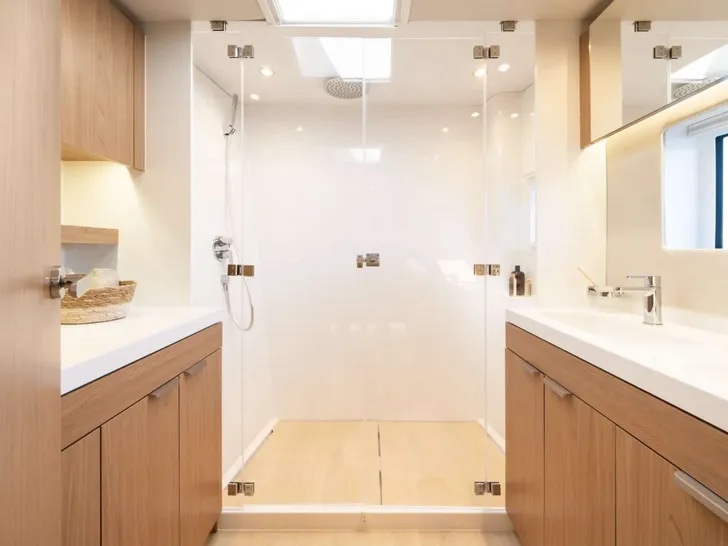
Bathrooms deserve equal consideration. A true roll-in shower is extremely rare on a charter catamaran, and bathrooms are generally compact and may not have grab bars.
Some yachts have a wet head, where the shower and toilet share the same space without a separate shower enclosure. This may eliminate the need to step over a separate shower threshold. However, the bathroom entrance may still have a raised threshold, and the floor can become slippery when wet.
Depending on the guest’s needs, a separate shower with a low entry may be preferable. I look closely at the layout, available space and access to the toilet and shower before recommending a yacht.
A beautiful cabin is only an advantage if guests can access and use it comfortably.
Ask the Captain, Not Just the Brochure
Brochures rarely include staircase measurements, step heights or detailed boarding information.
When mobility is a concern, I work with the captain or yacht management company to confirm these details. If necessary, I’ll request measurements or a short walkthrough video showing the boarding area, salon, cabin stairs and bathrooms.
A two-minute video can reveal far more about a yacht’s suitability than a dozen professional photographs.
Before You Book: A Practical Mobility Checklist
Before committing to a catamaran charter, consider the following:
- Boarding: How will guests board from the dock? Are there steps, a raised threshold or a passerelle? Is there a handrail?
- Cabins: Where is the guest’s cabin? How steep are the stairs, and is there a suitable handrail?
- Inside the cabin: Is the bed easy to access, and is there enough room for any mobility equipment?
- Bathrooms: Is there a raised threshold? Is the shower separate or part of a wet head? Is there enough space to use the toilet and shower comfortably?
- Main-deck access: Can guests move comfortably between the salon, cockpit and dining areas?
- Forward cockpit: Is there direct access from the salon or galley? Are there steps or a raised sill?
- Swimming: How will the guest enter and exit the water? Are there handrails, a swim ladder or a hydraulic platform?
- Tender transfers: How will guests board the tender? What assistance can the crew provide, and does the guest need to stand or step independently?
- Itinerary: Are dockside stops available? Will any excursions involve wet landings or uneven ground?
- Equipment: Is there room to store mobility or medical equipment, and can the yacht accommodate any power needs?
- Verification: Have the relevant layouts and boarding arrangements been confirmed with the captain?
Could a Motor Yacht Be a Better Fit?
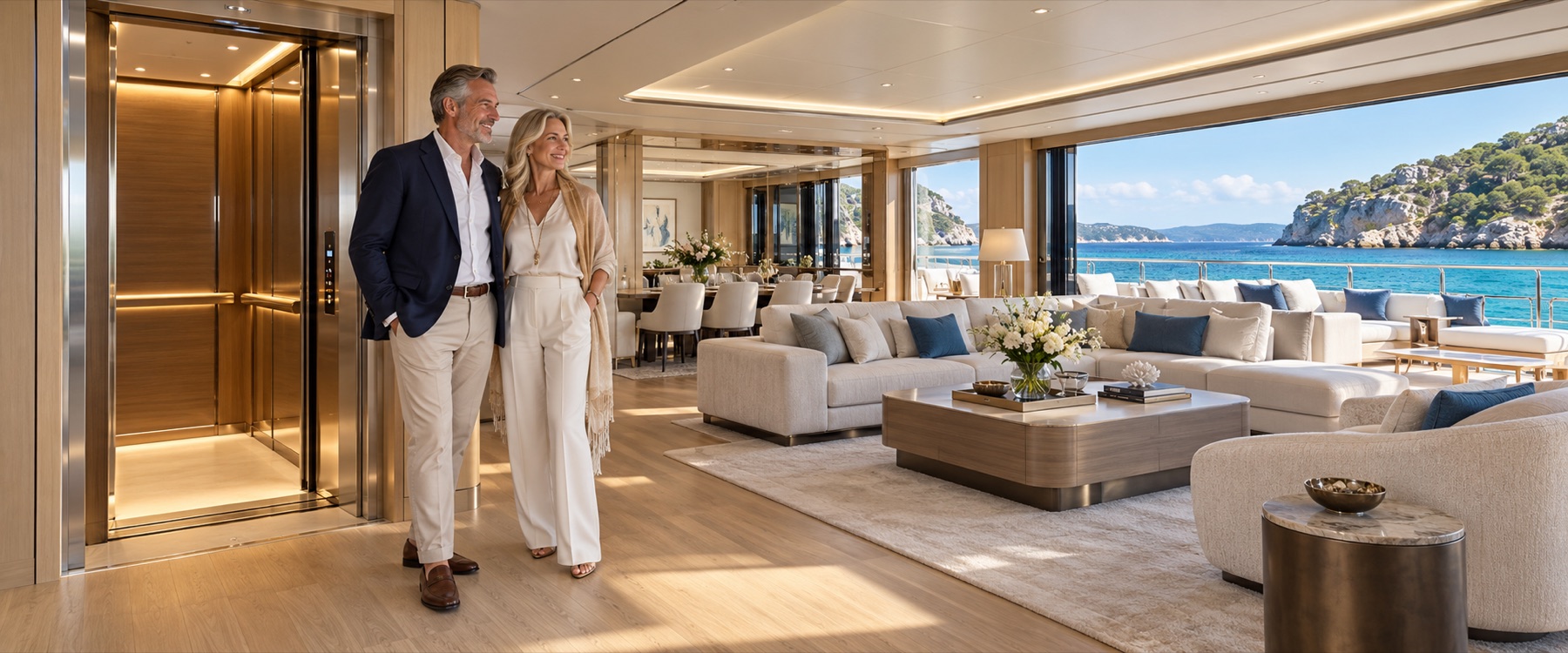
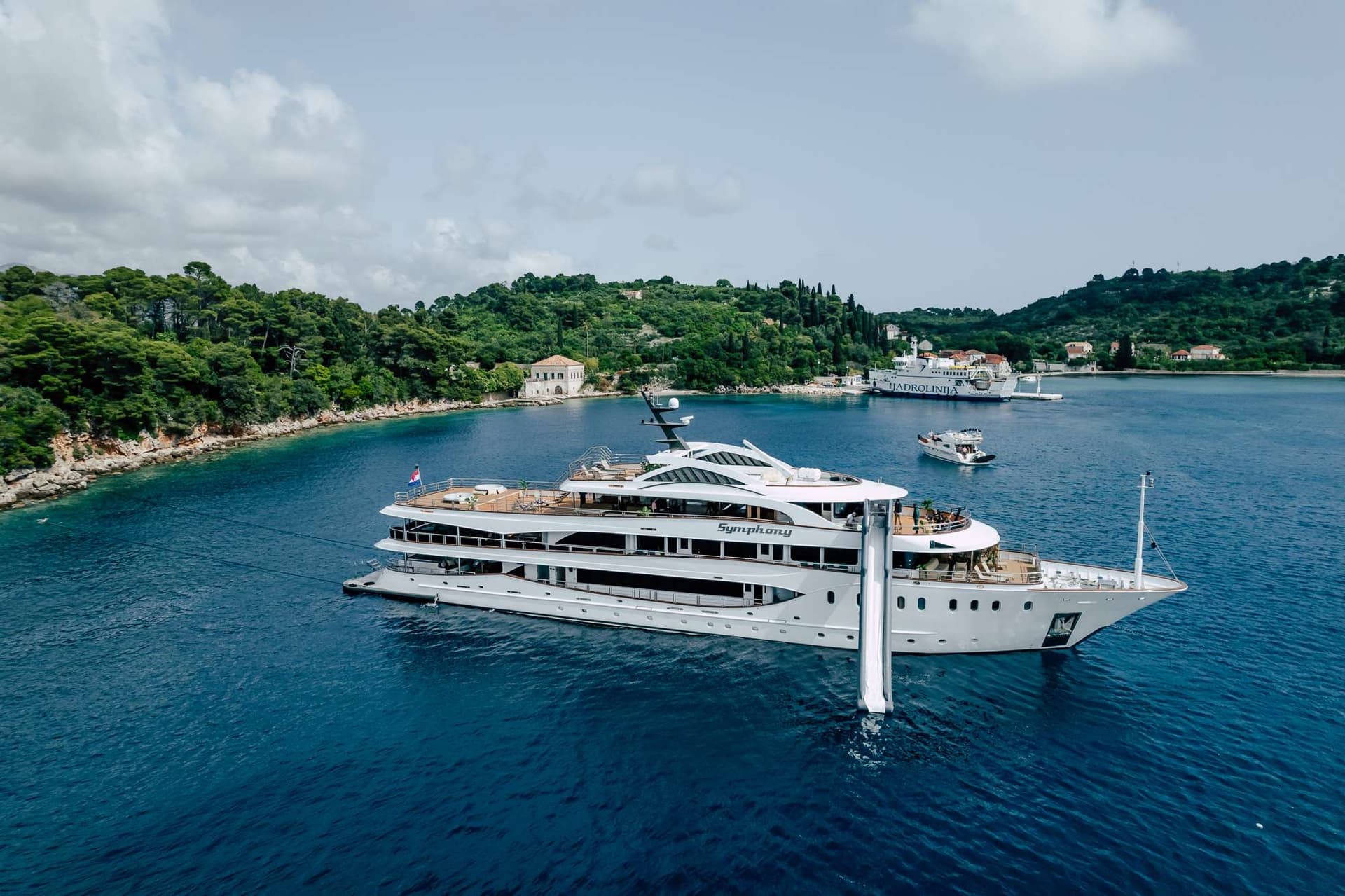
While catamarans can be a wonderful choice for guests with mobility concerns, they aren’t the only option worth considering. Depending on the guest’s needs, a motor yacht may offer features that make certain areas easier to access.
Some motor yachts have main-deck guest cabins, allowing guests to reach their bedroom without descending a staircase. On larger yachts, an elevator may connect some of the decks, making it easier to move between living areas and accommodations.
However, an elevator doesn’t automatically mean the entire yacht is accessible. It may not reach every deck, and guests may still encounter steps, narrow doorways or raised thresholds. Boarding, bathroom access and tender transfers also need to be considered.
Motor yachts with elevators are generally found in the larger, higher-priced end of the charter market, but there are also yachts without elevators that offer practical layouts for guests who can manage a few steps.
If mobility is a concern, we can explore both catamarans and motor yachts to find the best fit for your group, destination and budget.
Finding the Right Yacht
Mobility challenges don’t necessarily mean giving up the pleasure of a yacht charter. They simply make choosing the right yacht—and planning how to use it—more important.
No yacht should be considered fully accessible without confirming its layout, boarding arrangements and suitability for the individual guest.
The best yacht isn’t always the biggest or newest. It’s the one that fits how you actually move.
At Sanderson Yachting, I work closely with yacht owners, captains and management companies to help clients find yachts suited to their individual needs.
If mobility is a consideration for your next charter, I’d be delighted to help you find a yacht that allows everyone aboard to enjoy the experience.
Frequently Asked Questions About Mobility and Yacht Charters
Some catamarans can be a good fit, depending on the guest’s individual needs. Open living areas and low sterns can be helpful, but cabin stairs, raised thresholds and tender transfers may present challenges. We recommend reviewing the specific yacht’s layout and boarding arrangements with the captain before booking.
Most sailing catamarans have guest cabins below the main deck, accessed by stairs. However, some layouts—including certain Leopard 58 configurations—may have a main-deck cabin. The cabin’s exact layout and bathroom access should be confirmed for each yacht.
It depends on the guest’s needs and the individual yacht. Boarding, door widths, thresholds, cabin access and bathrooms can all present challenges. We can ask the captain for measurements and videos and discuss the guest’s equipment and transfer needs before recommending a yacht.
A motor yacht may be a better fit for some guests, particularly if it offers a main-deck cabin or an elevator. Each yacht is different, so boarding arrangements, deck access, bathrooms and tender transfers still need to be checked.
Some larger motor yachts have elevators connecting certain decks. Elevators are less common on smaller yachts and are generally found in the higher-priced end of the charter market. Even when a yacht has an elevator, it may not reach every deck.
It depends on the yacht, the guest’s abilities and the conditions. Some catamarans have stern steps or hydraulic swim platforms that may make access easier. Before booking, we can ask the captain about handrails, ladders and the assistance available.
Yes. We can discuss an itinerary with the captain that considers the guest’s needs, including opportunities to go ashore from a dock and excursions with fewer physical obstacles. Dock availability, weather and local conditions may affect the final plans.
Share the guest’s needs with your broker as early as possible. We can request measurements, photos or a walkthrough video and speak with the captain about boarding, cabin stairs, bathrooms, equipment and tender transfers.