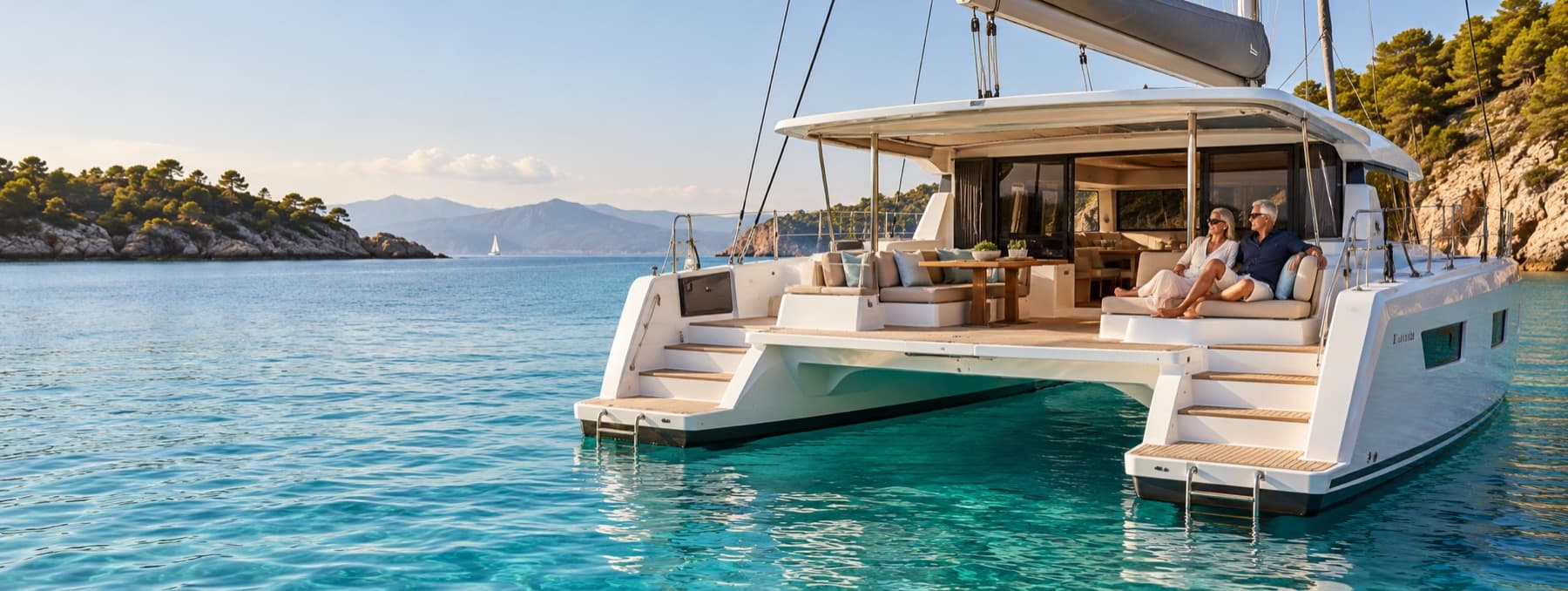
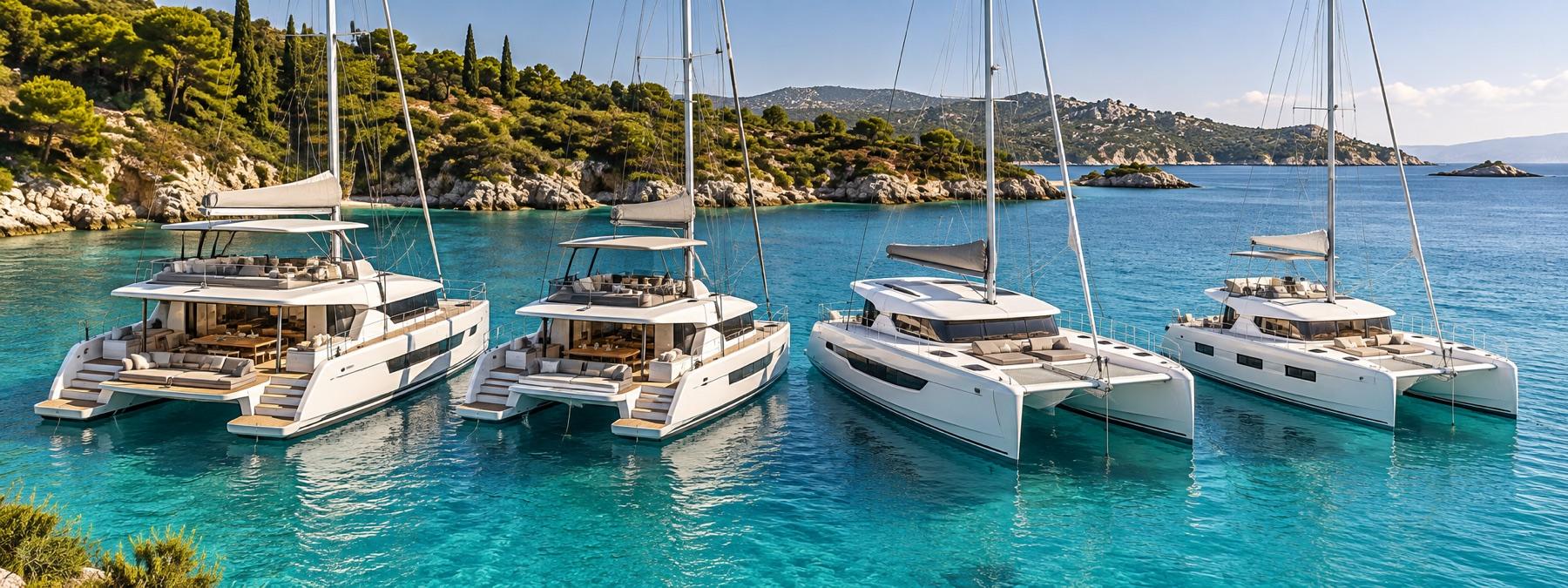
A private catamaran charter can be an incredible vacation. You wake up in a beautiful anchorage, spend your days exploring islands and swimming in clear water, and enjoy meals prepared by your crew, all without packing and unpacking as you move between destinations.
But when you’re comparing catamarans, the photos and advertised features don’t always tell the whole story.
A listing may say the yacht has four cabins, four bathrooms, air conditioning, and a generator. What it may not explain is that one bathroom is a wet head, the cabins aren’t equal in size, or you may not be able to retreat to an air-conditioned cabin in the middle of a hot afternoon.
Catamarans under 58 feet can offer a wonderful charter experience. The key is understanding what you’re booking and making sure it fits your group’s expectations.
Here’s what we recommend looking at before you sign a charter agreement.
1. There May Be at Least One Wet Head
One of the biggest surprises for first-time charter guests is the bathroom configuration.
Many smaller catamarans 55 ft and under have at least one wet head, usually in the aft cabin: a bathroom where the shower shares the same open space as the toilet and sink. There is no separate, enclosed shower stall.
When you shower, the toilet gets wet, along with the bathroom floor and potentially the sink area.
This isn’t limited to the smallest boats. Even some catamarans around 55 feet have wet heads. For example, certain Bali 5.4 configurations have aft cabin bathrooms with wet heads. Other layouts can differ, so the specific yacht matters.
This is especially important when couples or friends are sharing the charter cost. One cabin may have a separate shower, while another has a wet head. It’s better to understand those differences before everyone arrives and chooses a cabin.
Ask your broker:
- Which guest bathrooms have separate showers?
- Which cabins have wet heads?
2. Four Cabins Doesn’t Always Mean Four Equal Cabins
A catamaran may be advertised as having four guest cabins, but that doesn’t necessarily mean the cabins are the same size or offer the same level of comfort.
One cabin may have a smaller bed, less headroom, less storage, or a different bathroom. On some yachts, a bed is positioned against the wall and can be accessed from only one side.
Photos can make it difficult to judge the space, particularly when taken with a wide-angle lens. A cabin that looks roomy online may feel much more compact once you are standing inside it with a week’s worth of luggage.
The layout may work beautifully for a family with children but feel less equitable for four couples sharing the charter cost.
Before booking, make sure you understand the yacht’s cabin layout, bed sizes, and recent photos of each guest cabin. If the cabins differ significantly, your group can decide in advance who will stay where.
3. Air Conditioning: What Happens in the Middle of the Afternoon?
When guests ask if a yacht has air conditioning, they often think first about sleeping comfortably at night. Overnight air conditioning is generally an expected part of a crewed charter, but you should still confirm the specific yacht’s policy.
The question people often forget to ask is: Can we enjoy an air-conditioned salon or cabin during the hottest part of the afternoon?
On some smaller catamarans, air conditioning may be available during certain hours, but not necessarily whenever you want it. The crew may operate the generator on a schedule or need to manage the yacht’s electrical use throughout the day.
For one group, spending the afternoon outdoors, swimming, or enjoying the breeze is exactly what they want. For another, having a cool place to read, work, put a child down for a nap, or take a break from the heat is an important part of the vacation.
A yacht listing that says “air-conditioned” doesn’t answer those questions.
Ask your broker:
- Can the salon be air-conditioned during the afternoon?
- Can guests use air conditioning in their cabins during the day?
- What hours is air conditioning available throughout the night and into the morning?
- Are there set generator or air-conditioning hours?
- Can the air conditioning run while the yacht is underway?
The answers vary by yacht, so make sure they are confirmed before you commit.
4. Ask Your Broker to Include the Agreed AC Use in the Contract
If daytime air conditioning is important to you, ask your broker to confirm what the yacht will provide and have the agreed terms included in the special conditions of your charter agreement.
If the yacht can’t accommodate the schedule your group needs, your broker can help you consider another option.
5. Generator Size and Yacht Type Affects What Can Run at the Same Time
A generator produces electricity when the yacht isn’t connected to shore power. It can do much more than run the air conditioning.
Depending on the yacht’s electrical system, the generator may power or support:
- The watermaker, which produces fresh water.
- Battery charging for the yacht’s electrical systems.
- Galley appliances, including ovens, cooktops, coffee makers, or ice makers.
- Laundry equipment, where fitted.
- Guest outlets and appliances, including hair dryers.
- Other equipment, such as refrigeration or a compressor for water toys, depending on the yacht.
Larger catamarans often have larger generators and more capacity to operate several systems at once. On a smaller catamaran, the crew may need to manage the electrical load and schedule certain tasks around one another.
For example, on some yachts, you might need to turn off the air conditioning temporarily to use a hair dryer. The crew might also need to consider when to run the watermaker or use high-draw galley appliances.
This isn’t true of every yacht under 58 feet. Generator size, battery capacity, wiring, appliances, and operating practices all vary. The important question is what the specific yacht can comfortably run at the same time and whether that works for your group.
Ask your broker about the yacht’s actual daily operating policy, rather than assuming that a generator means unlimited power whenever you want it.
6. Flybridges Become More Common Around 55 Feet
For many guests, the flybridge is one of the most appealing spaces on a catamaran. It offers an elevated place to take in the views, relax, and spend time together away from the main cockpit.
Flybridges become more common in the 55-foot range. Both the Bali 5.4 and the Lagoon 55, for example, have flybridges.
But not every upper deck offers the same experience. Some have generous seating, sun pads, shade, and a table. Others have a smaller space that may accommodate only part of your group.
If a flybridge is important to you, ask:
- Is it a comfortable guest area or primarily a helm station?
- Can the entire group sit together?
- Is it covered?
- Is there a dining table or just lounging space?
7. Sailing Catamaran vs. Power Catamaran
Both sailing and power catamarans have two hulls and can provide an excellent charter experience. The right choice depends on how you want to travel and spend your time on board.
What about air conditioning while underway?
Many power catamarans are equipped to run air conditioning while underway, allowing guests to enjoy a cool interior during a passage.
On a sailing catamaran, you should not assume the air conditioning will be available while the yacht is sailing. Equipment and operating practices vary, and the crew may not run the generator or air conditioning underway.
That distinction can matter if you have children, guests who need a break from the heat, or anyone who prefers to relax inside while traveling.
Ask your broker: “Can this yacht run the air conditioning while underway, and will guests be able to use the air-conditioned salon and cabins during the passage?”
8. Maximum Guest Capacity Doesn’t Always Mean Maximum Comfort
A yacht may be advertised for eight guests, but that doesn’t necessarily mean every group of eight will feel equally comfortable.
Think about more than the number of beds. Consider the size of the floor space in the cabins, whether everyone can sit together in the shade, dine comfortably, spread out on the flybridge, and store their belongings.
A family with young children may be comfortable with smaller or unequal cabins. Four couples may prefer comparable cabins, separate showers, and more privacy.
The best yacht for your group depends on how you want to live on board, not just how many guests the yacht can accommodate.
9. Smaller Catamarans May Have More Noticeable Motion
Catamarans are popular for their stability, but they still move with the water. On a smaller yacht, guests may notice more motion depending on the yacht’s design, sea conditions, speed, and anchorage.
If someone in your group is prone to seasickness or sensitive to movement, tell your broker. Yacht size is one factor to consider, along with the destination, time of year, itinerary, and typical conditions.
10. Storage Space Is Limited
On a smaller catamaran, space is thoughtfully used, but there is only so much of it.
Cabins may have drawers, shelves, and some hanging space, but you shouldn’t expect a hotel-sized closet. Large, hard-sided suitcases can also be difficult to store after you unpack.
Soft-sided luggage is often easier to accommodate. Ask your broker what the yacht recommends, particularly if your group is bringing several large bags or bulky equipment.
11. Crew Size Shapes the Service Experience
Many smaller crewed catamarans operate with a captain and chef. A great team can provide a warm, personal, and memorable experience while handling a wide range of responsibilities throughout the day. Bigger catamarans have additional crew. What’s best for you depends on the level of service you have in mind for your charter.
Frequently Asked Questions About Catamarans Under 58 Feet
Yes. A catamaran under 58 feet can offer an excellent private charter experience. The best fit depends on your group’s expectations for cabin size, bathrooms, indoor and outdoor space, air conditioning, and service. Compare the specific yacht’s layout and operating policies before booking.
A wet head is a bathroom where the shower shares an open space with the toilet and sink instead of having a separate shower stall. When you shower, the toilet and bathroom floor get wet. Ask your broker which cabins have wet heads and request photos of every guest bathroom.
Some do. Certain Bali 5.4 configurations, for example, have aft cabin bathrooms with wet heads. Bathroom layouts vary by model and configuration, so a yacht’s length alone won’t tell you whether every cabin has a separate shower.
Separate showers become more common as catamarans get larger, but 58 feet is not a guaranteed cutoff. Your broker should confirm the bathroom layout of each guest cabin on the individual yacht.
It depends on the yacht. Some allow daytime air conditioning in the salon and cabins, while others have scheduled generator hours or limits on which areas can be cooled simultaneously. If having a cool indoor space during the afternoon matters to you, confirm that before booking.
Hair dryers draw substantial electrical power. On a yacht with limited generator or inverter capacity, the crew may need to temporarily switch off another high-demand appliance, such as air conditioning, to avoid overloading the system. This varies by yacht.
Depending on the installation, the generator may supply electricity for the watermaker, battery chargers, galley appliances, ice maker, laundry equipment, and guest outlets. Some equipment operates from batteries or other power sources, so the arrangement varies between yachts.
Many power catamarans can run air conditioning while underway. On sailing catamarans, availability depends on the equipment and operating policy; do not assume it will run while sailing. Ask whether the specific yacht provides air conditioning in the salon and cabins during passages.
No. Flybridges become more common around the 55-foot range, although some smaller catamarans also have them. The size, seating, shade, and access vary, so check whether the upper area comfortably accommodates your entire group.
If particular air-conditioning hours are important to your group, ask your broker to have the yacht’s agreed arrangements included in the charter agreement’s special conditions. These should identify the areas covered, agreed hours, availability underway, and any limitations or additional charges.
The Best Catamaran Is the One That Fits Your Expectations
A catamaran under 58 feet can be a fantastic choice. The experience can be relaxed, personal, and full of unforgettable moments on the water.
But if your priorities include equal cabins, separate showers, a spacious flybridge, or the ability to relax in air conditioning during the afternoon, those details deserve a closer look before you book.
At Sanderson Yachting, we believe in looking beyond the photos and asking the questions that affect your actual experience. We’ll help you compare layouts, understand the yacht’s operating policies, and find the right fit for your group.
And if air-conditioning use is essential to your comfort, we recommend having the yacht’s agreed terms included in the special conditions of your charter agreement, so everyone knows what to expect before you step on board.